
The typical middle class child has 13 books. But in the poorest neighborhoods, there may be as few as one book for every 300 children.¹
Unite for Literacy uses data from the NAEP survey of 8th graders to predict the likelihood that a home will have 100 books, an important benchmark, and then mapped the results using census data. The result is a geographic representation of the areas where children are most at risk for failing to learn to read proficiently.
Here are maps of Louisiana, Lafayette, and New Orleans with the greatest at-risk neighborhoods marked in red.
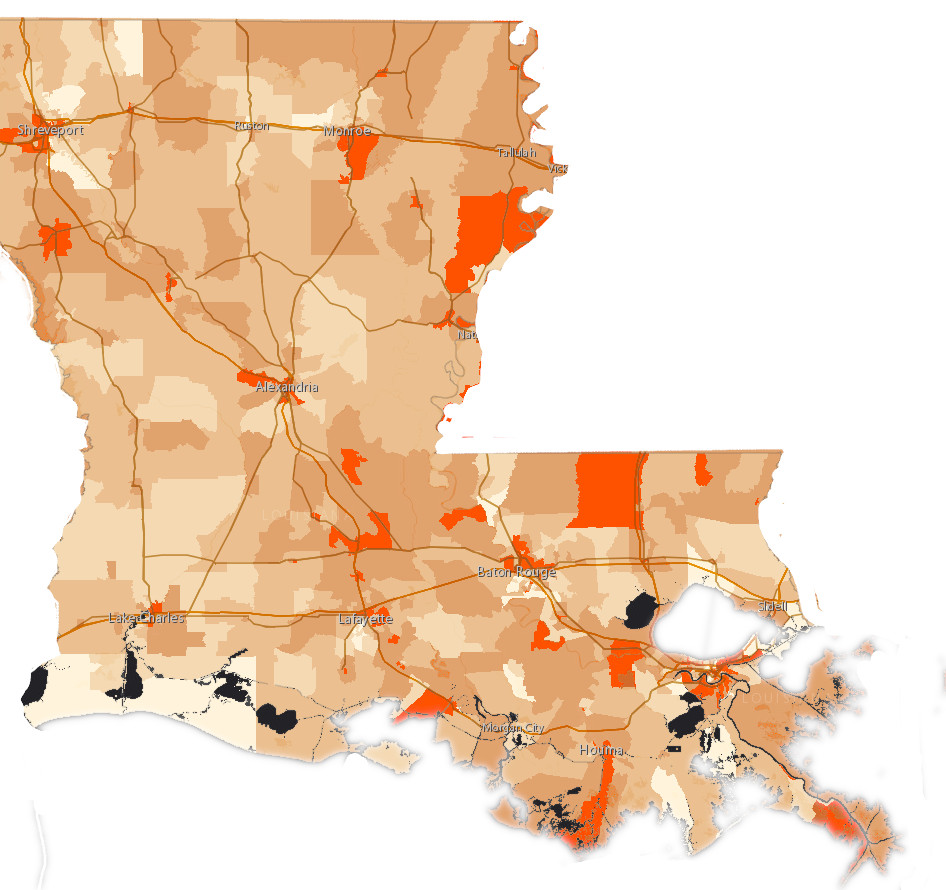
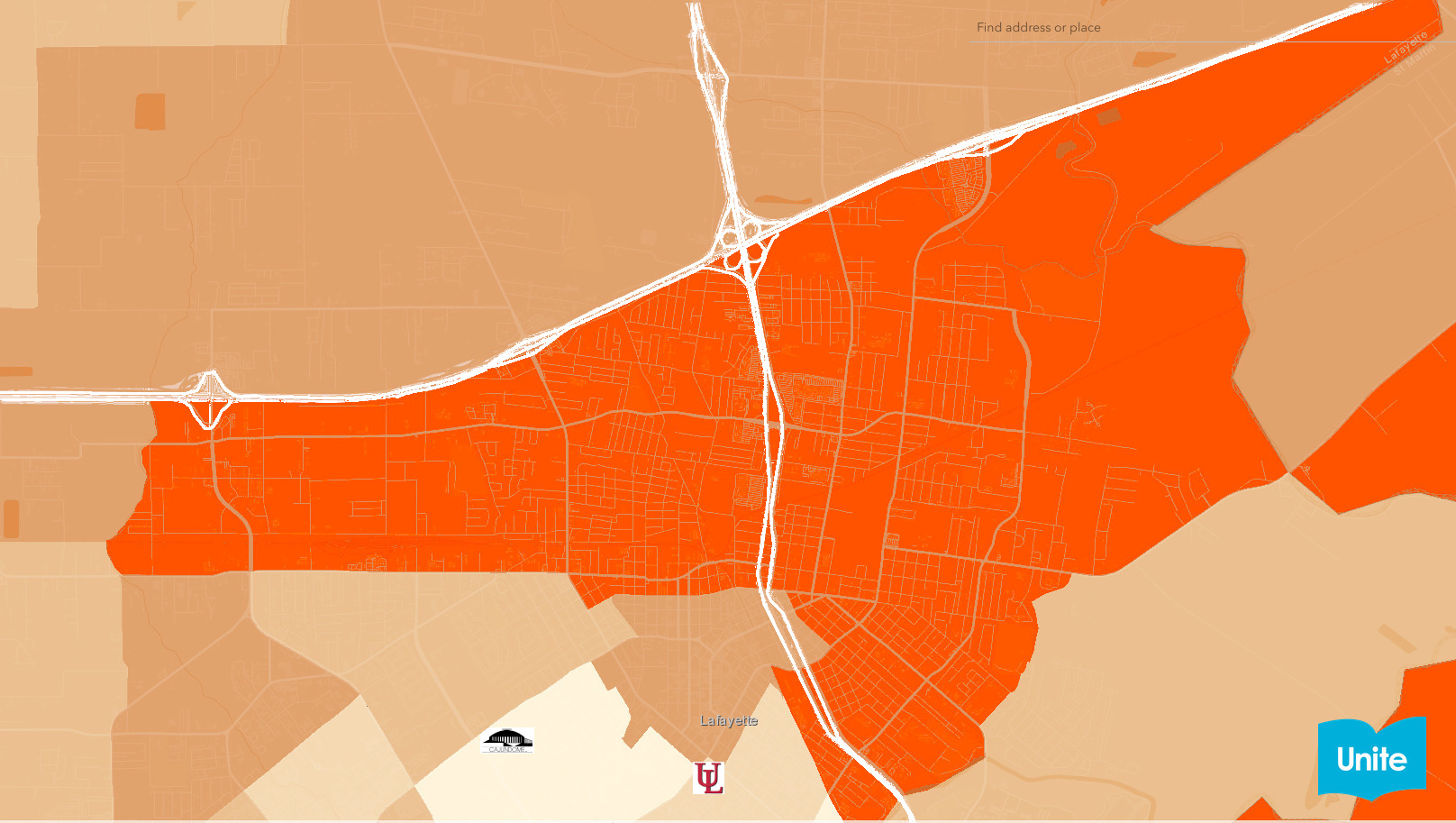
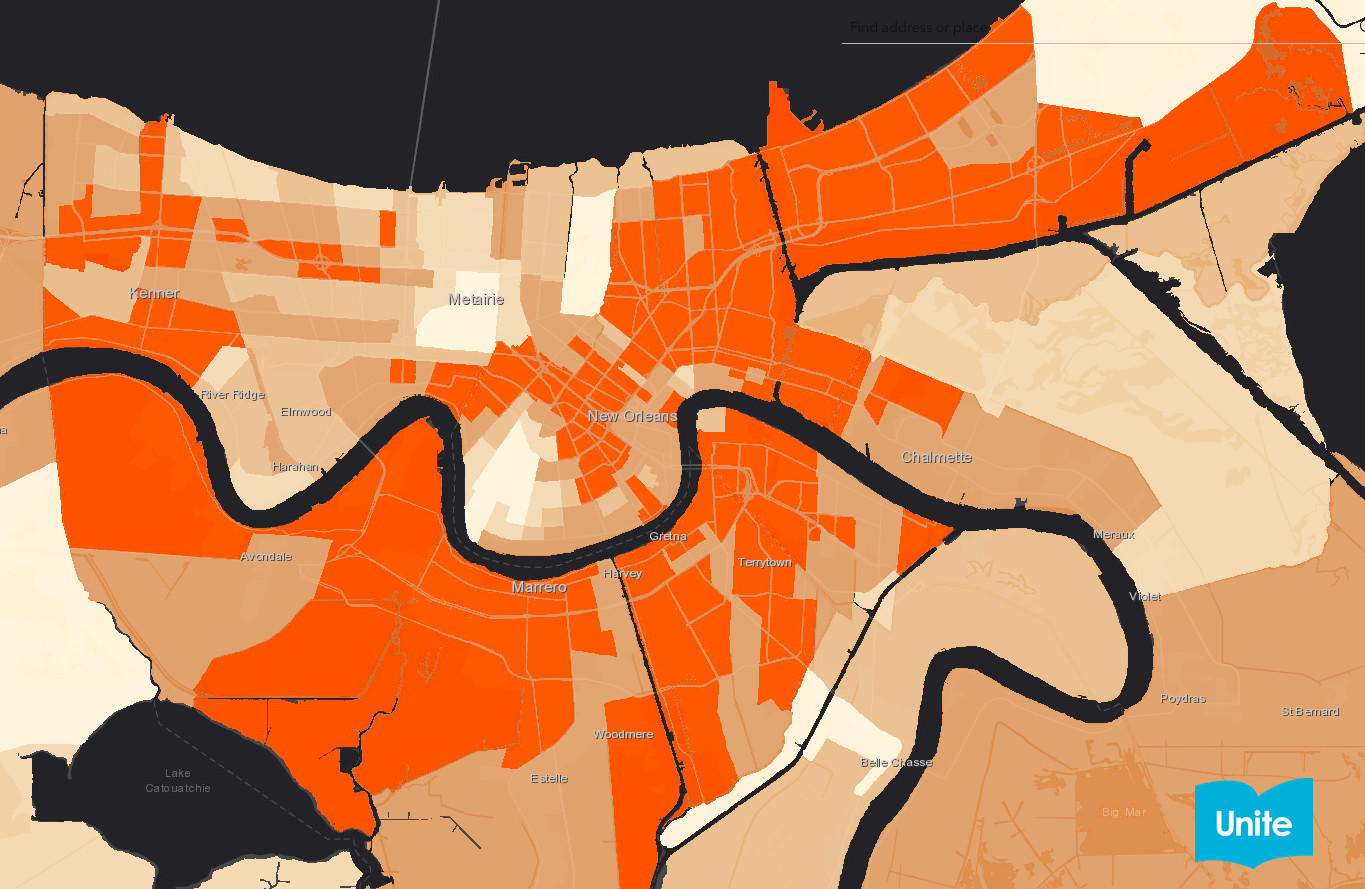
¹ Neuman, Susan B., and Donna Celano. ‘Access to print in low‐income and middle‐income communities: An ecological study of four neighborhoods.’ Reading Research Quarterly 36:1 (2001): 8-26. Link.